Wrists and Forearms: The Support System Behind Every Grip
Grip strength gets the longevity headlines while its support system — wrists and forearms — quietly determines whether the grip gets used: the push-up wrists that complain, the typing forearms that ache, the yoga weight-bearing that stings. The support-system guide.

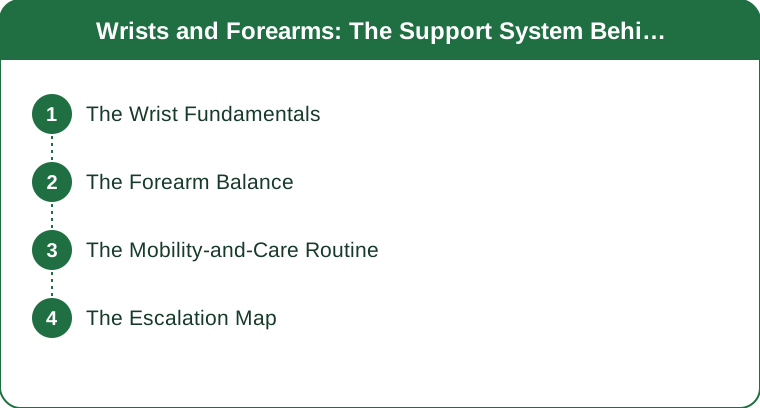
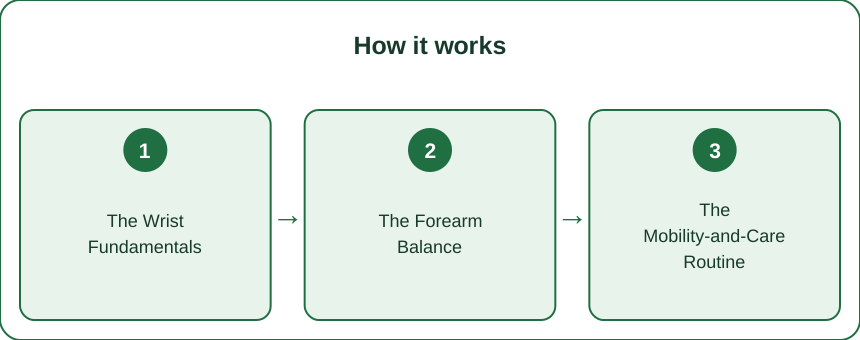
The Wrist Fundamentals
Understanding the complaints: the small-joint reality (wrists are mobility joints asked to bear load — the push-up, plank and handstand positions that load them at end-range; the complaints are usually capacity gaps, not damage), the desk contribution (the typing-and-mouse hours in one position — the wrist version of the sitting problem; stiffness plus sudden weekend loading is the classic recipe), the conditioning answer (wrists adapt to load like everything — the gradual weight-bearing progression that turns complaining wrists into capable ones; the adult-gymnastics wrist-prep wisdom applies to every floor-based discipline), and the modification bridge (the fist push-ups, parallettes and wedges that unload angles WHILE capacity builds — the tools that keep training during the adaptation).
The Forearm Balance
Training both sides: the flexor-extensor imbalance (gripping trains the closing muscles — the forearm’s flexors — while the extensors that open and stabilize lag; the imbalance behind many elbow-and-wrist complaints including the golfer’s-and-tennis-elbow family), the extensor exercises (the rubber-band finger opens — the desk-drawer exercise; the reverse wrist curls with light dumbbells; the fingertip push-up progression for the advanced), the flexor maintenance (the grip work from the grip-lab chapter — already covered by hangs and carries; the training most people have without knowing), and the ratio wisdom (every serious grip-training block includes extensor work — the balance that keeps the elbows quiet; the pull-push ratio doctrine at forearm scale).

The Mobility-and-Care Routine
The daily five minutes: the wrist circles and stretches (the flexor stretch — palm up, fingers pulled gently back; the extensor stretch — palm down, same; thirty seconds each, the desk-break classic), the loaded mobility (the hands-and-knees weight-shifting — rocking over the wrists in all directions; the yoga-wrist preparation that doubles as conditioning), the forearm release (the massage-ball or opposite-thumb work down the forearm — the pump release from the aerial chapter; typing forearms deserve what climbing forearms get), and the warm-up integration (wrist prep before weight-bearing sessions — the two minutes that change the push-up experience; cold wrists complain loudest).
The Escalation Map
Reading the signals: the capacity-gap tier (aches during new loading that settle in days — the adaptation conversation; ramp and condition), the pattern-complaint tier (the recurring same-spot pain with specific movements — the form-and-volume audit plus the extensor-balance work; the physio visit that finds what articles can’t), the numbness flag (tingling fingers — the nerve-involvement territory of carpal-tunnel-and-friends; the desk-setup audit and the professional assessment, not the push-through), and the perspective (wrists and forearms carry every rep, every keystroke and every jar — the support system’s five daily minutes protect the grip the headlines celebrate; the longevity handshake starts at the wrist). Support the supporters.
Condition wrists gradually, train the openers not just the grippers, five mobility minutes daily, numbness sees someone. The grip’s support system decides its career — wrists and forearms, maintained.
Keep Reading
This article is for general informational purposes only and is not medical advice. Always consult a qualified health professional for guidance specific to you.