5 Grip Holds Worth Building Into Your Warm-Up
Quick Answer: Warm up grip the way you warm up anything else - short, submaximal, and specific to what is coming. Five holds cover the main patterns: a passive dead hang for the tissue, a plate pinch for the thumb, a towel hang for the crushing grip, a bottom-up carry for wrist stability, and an open-hand bar hold for the fingers. Ten to twenty seconds each, one round, about three minutes total. Do them before your first working set, not after your last one.
Most grip training happens at the wrong end of the session. By the time you get to it, everything is fatigued, the quality is poor, and the thing it was supposed to protect - your elbows and wrists in the main lifts - was never protected at all.
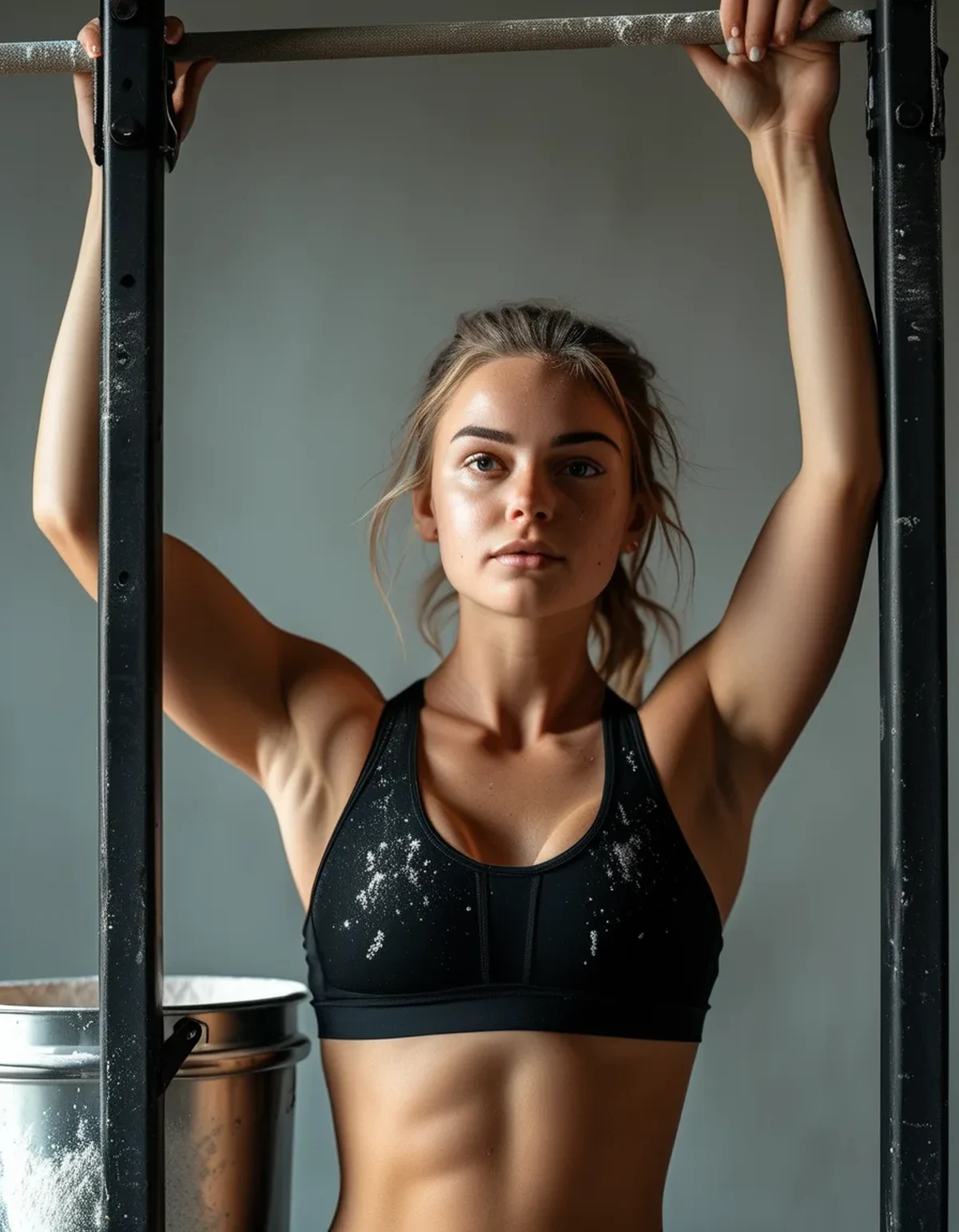
1. The passive dead hang - for the tissue, not the muscle
Hang from a bar with straight arms and a relaxed shoulder for 15 to 20 seconds. Not an active hang with the shoulders pulled down; the point here is to let the tissue load gently.
What it prepares: the whole chain from fingers through forearm to elbow and shoulder. A passive hang decompresses the shoulder, lengthens the forearm flexors under light load, and gets blood into the tissue that is about to work.
Why it goes first: it tells you immediately what kind of day it is. If your hands feel raw, if the elbow tendons are tender, or if 15 seconds is genuinely hard today, you have information before you have loaded a bar.
Progression: longer hangs, then a single-arm assisted hang with the other hand on your wrist. Do not add weight in a warm-up - the aim is preparation, not stimulus.
Common error: gripping hard. Let the fingers hook the bar rather than crushing it. Crushing turns a warm-up into a set.
2. The plate pinch - for the thumb, which is the usual weak link
Pinch two 5kg plates together, smooth sides out, and hold for 10 to 15 seconds per hand. Thumb on one side, fingers on the other, arm hanging at your side.
What it prepares: the thumb adductors and the pinch grip, which is the pattern most people never train and the one that fails first in carries, awkward lifts, and anything with a thick or smooth handle.
Why it belongs in a warm-up: it wakes up a pattern that otherwise stays dormant, and pinch is the grip type most sensitive to being cold. A pinch that feels fine in July can feel useless in a cold garage gym in October.
Progression: heavier plates, or three plates, or holding for longer. In a warm-up, keep it comfortably submaximal - you should be able to set it down deliberately rather than drop it.
Common error: letting the plates rest against your thigh. Hold them clear of the body so the thumb actually works.
3. The towel hang - for the crushing grip and the fingers
Drape a towel over the bar and hang from both ends for 10 to 15 seconds. A thicker towel is harder.
What it prepares: the crushing grip and the deep finger flexors, plus the wrist in a slightly less stable position than a bar provides. The towel moves, which recruits stabilisers a fixed bar does not.
Why it is worth the ten seconds: it exposes any asymmetry immediately. If one hand slides before the other, you have a side-to-side difference worth knowing about before you load a barbell asymmetrically for the next hour.
Progression: one towel per hand, then a thicker towel, then a single-arm hold. In a warm-up, both hands on one towel is enough.
Common error: wrapping the towel around the hand. Hold the end in a closed fist. Wrapping removes the grip challenge entirely and turns it into a hang.

4. The bottom-up carry - for wrist stability and shoulder position
Hold a light kettlebell upside down at shoulder height, elbow tucked, and walk 10 to 15 metres per side. Light means genuinely light - 8 to 12kg is plenty for most people in a warm-up.
What it prepares: wrist stability and the reflexive grip. Keeping a bottom-up bell balanced demands constant micro-adjustment through the hand and forearm, and it switches on the shoulder stabilisers as a side effect.
Why it belongs before pressing and overhead work specifically: the position is essentially a loaded rack position, and it primes the exact wrist and shoulder alignment that overhead work needs.
Progression: heavier bell, longer walk, or a bottom-up press. In a warm-up, prioritise a clean position over load every time.
Common error: letting the wrist bend backwards. The forearm and hand should form a straight line. A bent wrist means the bell is too heavy for a warm-up.
5. The open-hand bar hold - for the fingers without the thumb
Hold a barbell with a thumbless grip - fingers over the bar, thumb alongside - for 10 to 15 seconds at a light weight. Do this in a rack at hip height so you can set it down safely.
What it prepares: the finger flexors in isolation from the thumb, which is the specific pattern that fails in a deadlift when the bar starts to roll out of the fingers.
Why it is the last one: it is the most specific to a heavy pull and it should sit closest in time to the first working set.
Progression: heavier, or longer, or a single-arm hold. Keep it modest in a warm-up - this is the hold most likely to be turned into a maximal effort by accident, which defeats the purpose.
Common error: doing it heavy enough to be a set. If your grip is fatigued when you start deadlifting, the warm-up has actively cost you.
Safety note: never use a thumbless grip on a bar over your body or overhead. It is fine for a static hold in a rack and dangerous under a bench press.
FAQ: Grip Warm-Ups, Answered
How long should the whole thing take?
About three minutes. One round of five holds, 10 to 20 seconds each, minimal rest. If it takes ten minutes it has become a workout.
Will this make my grip weaker for the main lifts?
Not at these durations and loads. If you feel weaker, you went too heavy or too long - halve both. A proper warm-up should leave the hands feeling awake, not pumped.
Should I still train grip separately?
Yes, if grip is a limiting factor for you. This is preparation rather than training. The dedicated work still belongs at the end of a session.
Does this help with elbow pain?
Gentle progressive loading of the forearm tissue before hard work is generally protective, and persistent elbow pain needs assessment rather than a warm-up. This is general information, not medical advice.
Is it worth doing in autumn specifically?
More than in summer. Cold hands lose grip strength and fine control measurably, and a gym that has just come off summer temperatures is a genuinely different environment for the first sets.
TL;DR:
- Grip is usually trained when it is already fried; five short holds at the start prepare the tissue and expose the weak link before it matters.
- Passive dead hang for the tissue, plate pinch for the thumb, towel hang for crushing grip and asymmetry, bottom-up carry for wrist stability, open-hand bar hold for the fingers.
- Ten to twenty seconds each, one round, roughly three minutes total, before the first working set.
- Keep every hold submaximal - if your grip is fatigued afterwards, the warm-up cost you the session.
- Never use a thumbless grip on anything over your body.
This matters more as the gym gets colder. Cold hands lose both strength and fine control, and three minutes buys most of it back.
Keep Reading
This article is for general informational purposes only and is not medical advice. Always consult a qualified health professional for guidance specific to you.