Grip Strength Benchmarks by Age: How Your Numbers Actually Compare
Quick Answer: Average grip strength for women ranges roughly from 25-30kg in their 20s-30s down to 15-20kg by their 60s-70s, measured with a hand dynamometer. Numbers meaningfully below your age bracket’s range are worth addressing with targeted training, since grip strength is linked to overall functional health, not just hand performance.
You’ve heard grip strength matters for more than just opening jars, but without a number to compare against, it’s hard to know if yours is actually fine or worth working on.

Test 1: Using a Hand Dynamometer
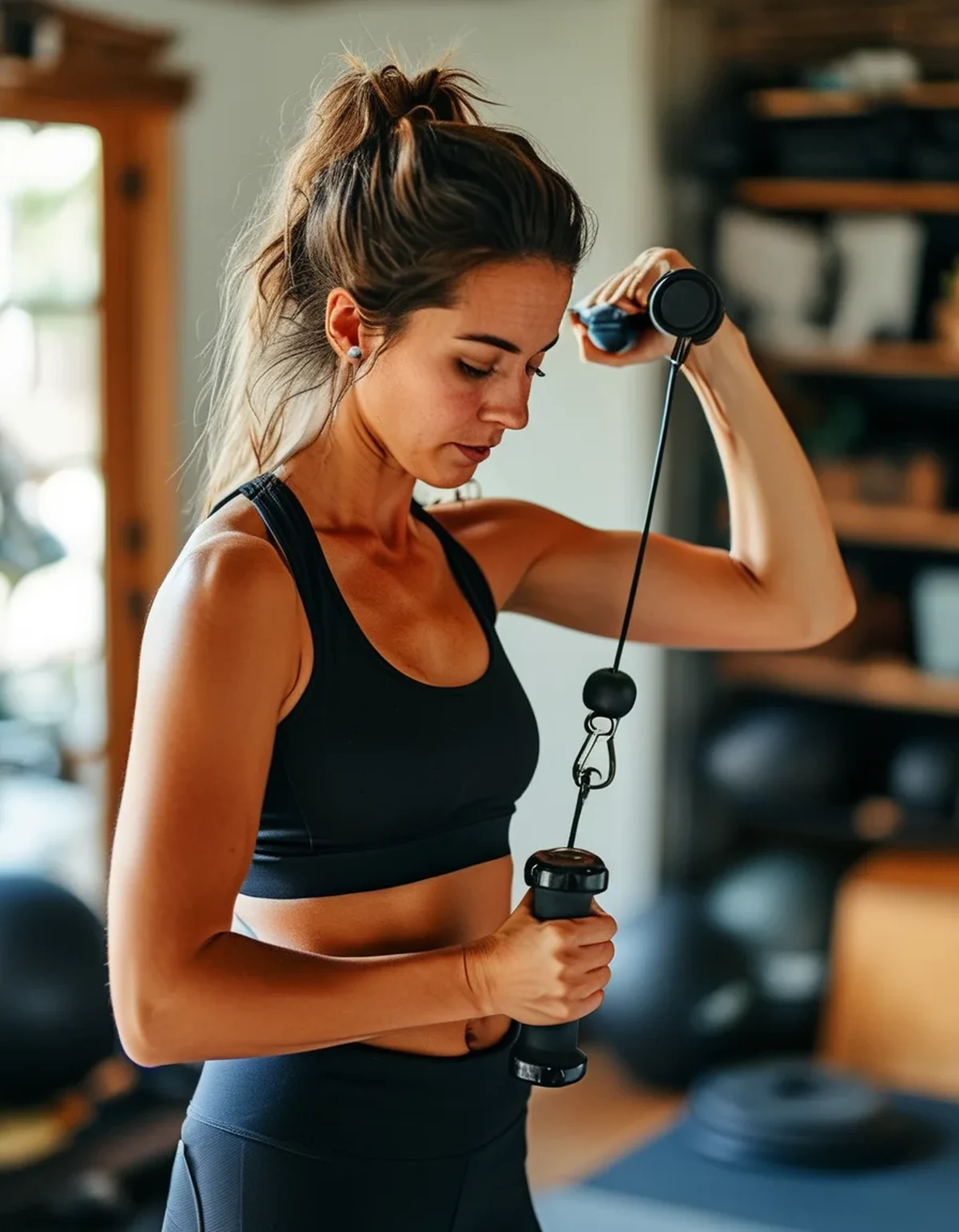
A hand dynamometer is the standard tool — squeeze it as hard as possible for 3-5 seconds, three times per hand, and record your best reading. This gives you an objective, repeatable number rather than a subjective sense of “strong” or “weak” grip.
Most gyms or physical therapy clinics have one available, and home versions are inexpensive and reasonably accurate for tracking your own trend over time, even if not lab-precise.
Test 2: The Dead Hang Alternative
If you don’t have a dynamometer, a dead hang from a pull-up bar is a practical substitute — time how long you can hang with straight arms before your grip gives out. Under 20 seconds may indicate a grip weakness worth addressing; 30-45+ seconds suggests solid functional grip endurance for most everyday and athletic demands.
This test is less precise than a dynamometer but requires no equipment beyond a bar, making it accessible for a quick home check.
Reading Your Numbers Against Age Benchmarks
20s-30s: roughly 25-30kg average for women on a dynamometer. 40s-50s: roughly 20-25kg average. 60s-70s: roughly 15-20kg average, reflecting typical age-related strength decline.
These are population averages, not hard cutoffs — being somewhat below your bracket isn’t alarming on its own, but a number significantly below range, especially combined with other strength decline, is worth discussing with a doctor or physical therapist.
Why Grip Strength Matters Beyond Just Your Hands
Research has repeatedly linked grip strength to overall mortality and functional health outcomes in older adults — it’s used as a proxy marker for general muscular health and even cardiovascular risk in some studies, not because grip itself is uniquely important, but because it’s an easy, non-invasive way to measure overall strength decline.
This is why grip strength shows up in health assessments well beyond fitness contexts — it’s a simple window into broader strength trends that are harder to measure directly.
How to Improve a Below-Average Number
Farmer’s carries, dead hangs, and hand gripper training 2-3x weekly are the most direct ways to build grip strength specifically. Compound lifts like deadlifts and rows also build grip indirectly as a byproduct of holding heavier loads.
Most people see measurable improvement in dynamometer readings or dead hang time within 6-8 weeks of consistent, dedicated grip training — it responds relatively quickly compared to some other strength qualities.
FAQ: Grip Strength Benchmark Questions, Answered
How often should I retest my grip strength?
Every 6-8 weeks is enough to see meaningful trend changes without over-testing; daily or weekly testing adds noise rather than useful signal.
Does hand dominance affect which number to use?
Test both hands and use your dominant hand’s number for benchmark comparison, but note the gap between hands too — a large asymmetry can be worth mentioning to a physical therapist.
Can grip strength decline be a sign of something beyond aging?
Yes — a sudden, sharp decline (versus gradual age-related change) can sometimes signal a nerve or muscular issue worth medical evaluation rather than assuming it’s just normal aging. This is general information, not medical advice.
TL;DR:
- Test with a dynamometer or dead hang timing for an objective baseline number
- Average grip strength declines gradually from roughly 25-30kg in your 20s to 15-20kg by your 60s-70s
- Grip strength is a broader marker of functional health, not just hand performance
- Farmer’s carries, dead hangs, and grippers 2-3x weekly improve it within 6-8 weeks
Keep Reading
This article is for general informational purposes only and is not medical advice. Always consult a qualified health professional for guidance specific to you.