5 Grip Tools Worth Owning, Ranked by What They Actually Fix
Quick Answer: Fat Gripz fix crush strength on barbells, a hand gripper fixes raw crush power, a hangboard fixes support-grip endurance, a farmer’s handle fixes carry strength, and a wrist roller fixes forearm extensor weakness — pick the tool for the failure, not the trend.
Grip tools get bought in bulk and used once. The reason most sit in a drawer isn’t that they don’t work — it’s that people buy whatever’s trending instead of matching the tool to which specific grip weakness they actually have.
Tool 1: Fat Gripz (or thick-bar attachments)
Fixes: crush strength during barbell lifts. Adding thickness to a barbell forces your hand to generate more crush force just to hold the bar, which carries over directly to deadlift and row grip failure. Use them on 2-3 accessory sets per week rather than every heavy lift, since they fatigue grip fast.
Tool 2: Spring-loaded hand gripper
Fixes: raw crush power. This is the tool for pure closing-force strength — useful if your specific weak point is the last inch of a firm handshake or crushing grip, less useful for the sustained holds pole, climbing, or carries demand. Progressive resistance grippers (adjustable) are worth the extra cost over fixed-tension ones.
Tool 3: Hangboard or pull-up bar dead hangs
Fixes: support-grip endurance — the ability to hold your own bodyweight passively for time. This is the single best predictor of climbing and pole-related grip fatigue, trained with 20-40 second hangs, 3-5 sets, 2-3x per week.

Tool 4: Farmer’s carry handles
Fixes: loaded carry strength — grip under load while walking, which is a completely different skill than a static hang. If grocery bags or a loaded barbell walk are where your grip fails, this is the specific tool, not a hangboard.
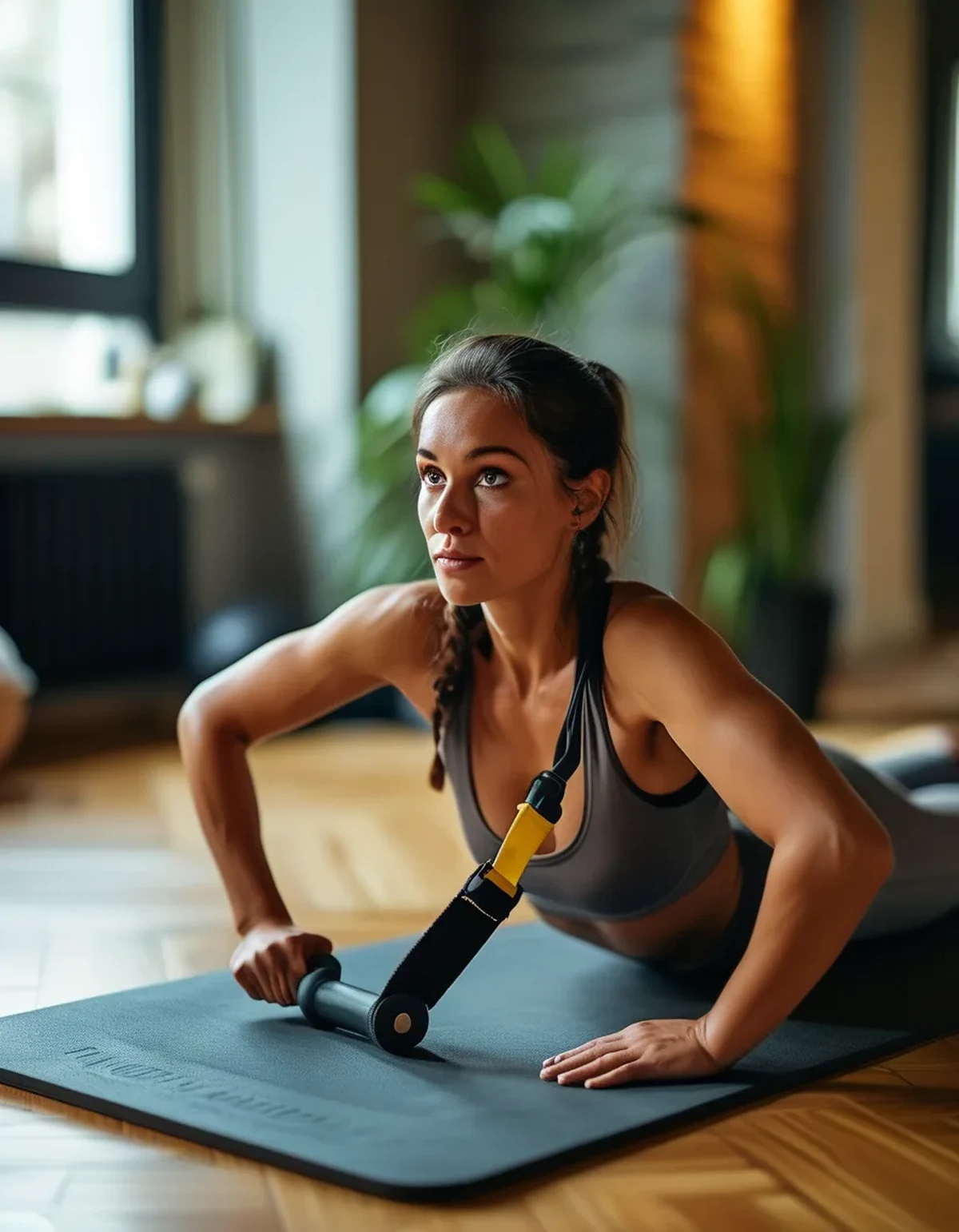
Tool 5: Wrist roller
Fixes: forearm extensor weakness, the often-neglected opposite side of crush strength. Most grip failure comes from underdeveloped extensors that fatigue and can’t stabilize the wrist during a grip-heavy set — 2-3 sets of a full roll-up-and-down, once or twice a week, closes this gap.
FAQ: Grip Training Tool Questions, Answered
Do I need all 5 grip tools or just one?
Start with whichever matches your specific failure point — if you don’t know, a hangboard or simple dead hang test is the most broadly useful starting tool.
How often should grip tools be trained?
Most grip work fatigues quickly and needs 48 hours to recover — 2-3 sessions per week per tool is plenty; daily max-effort grip training usually backfires.
Can grip tools replace direct exercise-based grip training like deadlifts?
No — they supplement it. The tools isolate specific weak points, but compound lifts remain the best overall grip stimulus.
TL;DR:
- Fat Gripz: crush strength on the bar
- Hand gripper: raw crush power
- Hangboard/dead hangs: support-grip endurance
- Farmer’s handles: loaded carry strength
- Wrist roller: forearm extensor balance
Pick the tool for your actual weak point and you’ll use it a lot more than once.
Keep Reading
This article is for general informational purposes only and is not medical advice. Always consult a qualified health professional for guidance specific to you.