Why Grip Strength Is Linked to Longevity (and How to Actually Improve It)
Quick Answer: Grip strength correlates with overall muscular health, cardiovascular function, and even mortality risk in research studies — it’s used as a quick, measurable proxy for full-body strength and functional aging. Training it directly (carries, dead hangs, hand grippers) supports both grip and broader strength.
A weak handshake doesn’t just make jar-opening annoying — researchers actually track grip strength as a signal for how well the rest of the body is holding up. It’s one of the simplest health metrics that quietly says a lot.

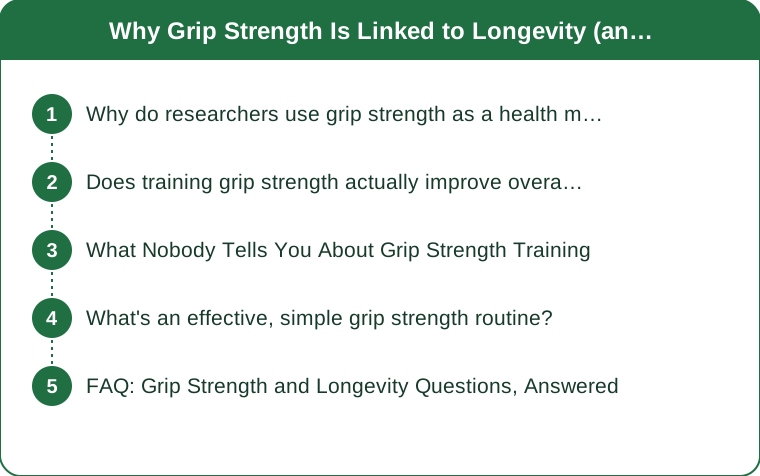
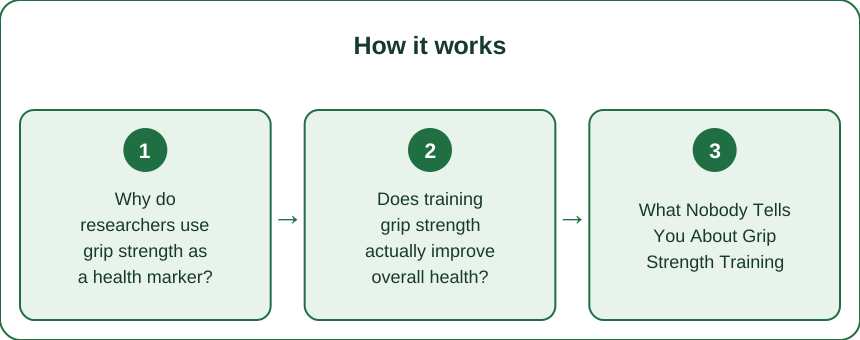
Why do researchers use grip strength as a health marker?
Because it’s easy to measure precisely (a dynamometer gives an exact number) and it correlates strongly with overall muscle mass and neuromuscular function — grip strength doesn’t develop in isolation from the rest of your muscular system.
Multiple large studies have found lower grip strength associated with higher risk of cardiovascular issues and overall mortality, likely because it reflects broader physical decline rather than causing it directly.
Does training grip strength actually improve overall health?
Indirectly, yes — but the causation likely runs the other way too. General strength training improves grip strength as a side effect, and grip-specific training (carries, hangs) tends to come paired with full-body compound movements anyway.
Think of grip strength less as a standalone health lever and more as an easy checkpoint — improving it usually means you’re also improving broader strength and activity levels.

What Nobody Tells You About Grip Strength Training
Grip strength responds unusually fast compared to other muscle groups — many people notice a measurable difference within 3-4 weeks of consistent carry or hang work, faster than typical hypertrophy timelines elsewhere.
The catch: it also fades fast without maintenance. Grip is a ‘use it or lose it’ strength more than most, since daily life rarely demands a true maximal grip effort.
What’s an effective, simple grip strength routine?
Farmer’s carries: heavy dumbbells or kettlebells, walk 30-40 seconds, 3 sets, 2x/week.
Dead hangs: from a pull-up bar, accumulate 30-60 total seconds per session, building up gradually.
Hand grippers or a stress ball routine: 3 sets of 10-15 squeezes per hand, useful as a supplement, not a replacement, for carries and hangs.
Rotate these across the week rather than doing all three every session — grip fatigues fast and needs recovery like any other muscle group.
FAQ: Grip Strength and Longevity Questions, Answered
Is grip strength training safe for older adults?
Yes, and often specifically recommended — it’s linked to fall prevention and independence in daily tasks like carrying groceries.
How is grip strength actually measured?
A hand dynamometer gives a precise kilogram or pound reading; without one, tracking dead hang time or carry weight works as a practical substitute.
Can grip strength improve at any age?
Yes — studies show measurable grip strength gains from consistent training well into older adulthood, though gains slow compared to younger training age.
TL;DR:
- Grip strength correlates with overall muscular health and is used as a longevity marker in research
- It likely reflects broader strength rather than independently causing better health
- Grip strength improves relatively fast (3-4 weeks) but also fades fast without upkeep
- Farmer’s carries and dead hangs 2x/week build it efficiently alongside general strength
Train it like any other muscle — consistently, with progressive load — and treat the number as a useful checkpoint, not a standalone fix.
Keep Reading
This article is for general informational purposes only and is not medical advice. Always consult a qualified health professional for guidance specific to you.