5 At-Home Grip Tests to Find Your Weak Link
Quick Answer: Grip has several distinct capacities - crushing, pinching, supporting over time, wrist and thumb stability - and being strong in one says little about the others. These five tests each isolate a different one, need almost no equipment, and take about fifteen minutes total. The pattern matters more than any single number: if support endurance is strong but pinch is weak, that is a different training plan from the reverse.
You can deadlift respectably and you cannot open a jar.
Both of those are grip, and they are not the same grip.
This is general information, not medical advice.
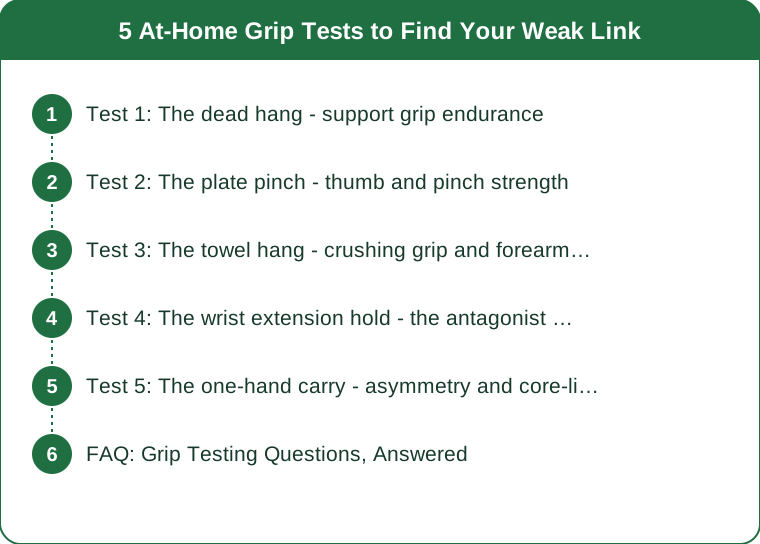
Test 1: The dead hang - support grip endurance
What it measures: how long your fingers can hold body weight against gravity - support grip, which is the capacity that fails during deadlifts, carries and pull-ups.
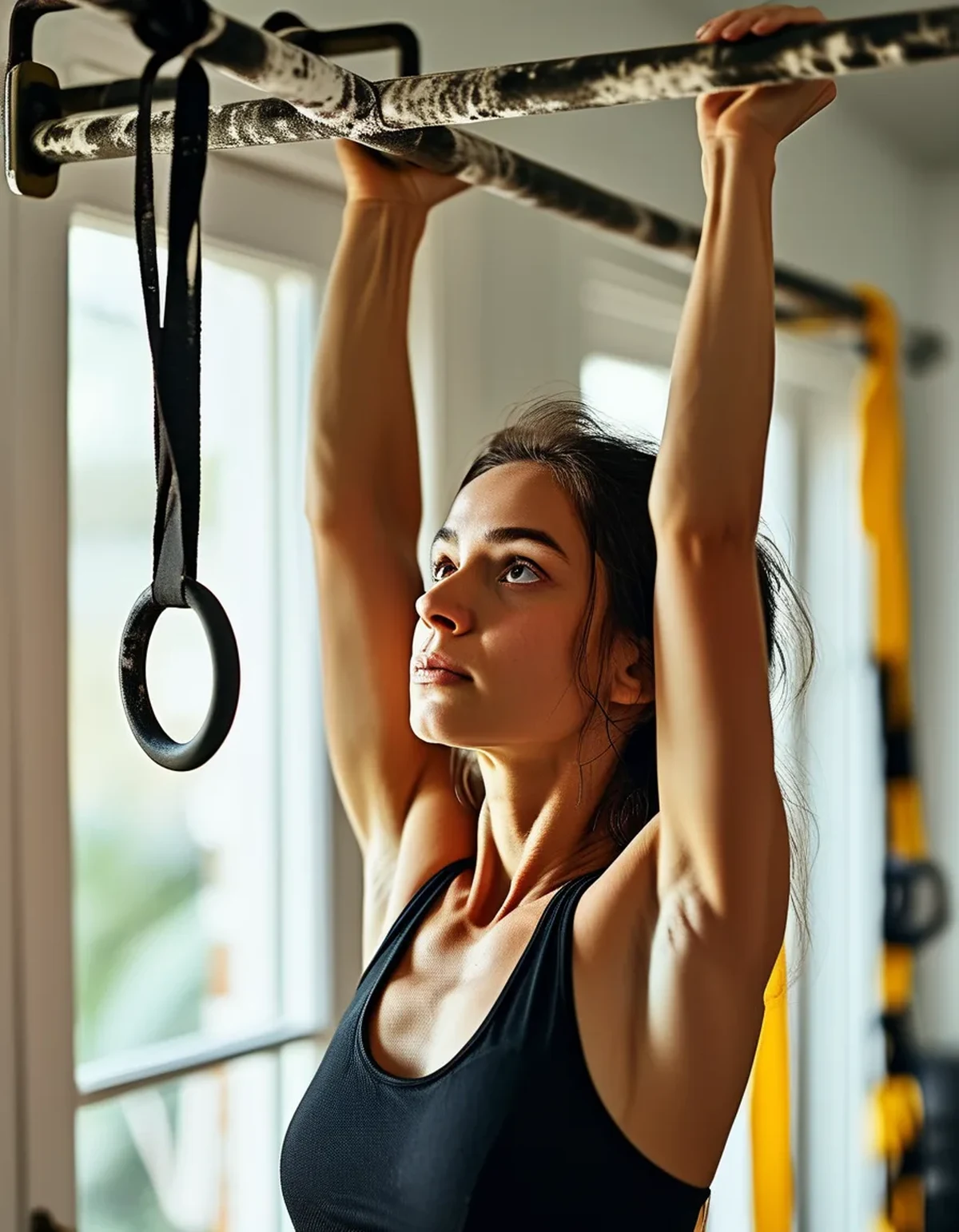
How to do it: Hang from a bar with an overhand grip, hands roughly shoulder width, arms straight, feet clear of the floor. Start a timer and hold until you cannot maintain the grip. Stop for grip failure, not for shoulder discomfort - if the shoulders give out first, that is a different result and worth noting separately.
Rough benchmarks for women: under 20 seconds suggests support grip is a clear limiter; 30 to 45 seconds is a reasonable baseline; over 60 seconds is strong; over 90 seconds is genuinely trained.
What it tells you: this is the most functionally relevant single test for anyone lifting. If your deadlift is limited by the bar slipping rather than by your legs or back, this number is why.
Reading it alongside the others: a strong dead hang with a weak pinch test means you have trained the fingers in flexion but not the thumb. A weak dead hang with strong everything else usually means an endurance problem rather than a strength one - your fingers are strong enough and cannot sustain it.
The immediate training implication: train it with hangs, three to five sets of 20 to 40 seconds, two or three times a week. Progress by adding time first and load second.
Test 2: The plate pinch - thumb and pinch strength
What it measures: the strength of the thumb opposing the fingers, which is the most commonly neglected grip capacity and the one that limits everyday tasks.
How to do it: Take two smooth weight plates, put them together with the smooth sides facing outward, and pinch them between thumb and fingers. Lift clear of the floor and hold for time. If you do not have plates, a stack of hardback books works - measure the thickness and weight so you can repeat it.
Rough benchmarks: two 5kg plates for 10 seconds is a solid baseline for a woman; two 10kg plates for 10 seconds is strong. If you cannot hold two 5kg plates at all, pinch is your weak link.
What it tells you: pinch strength is a strong indicator of thumb and first dorsal interosseous function - the muscles most affected by desk work and by prolonged phone use. It is also the grip that fails first with age.
Why it matters beyond the gym: jar lids, door handles, carrying a laptop, holding a heavy pan by the handle - all pinch-dominant. This is the test that correlates best with the everyday frustrations people attribute to weak hands.
Training it: plate pinches for time, thick-handled implements, and simply carrying awkward objects with the fingers rather than hooking them. Two sets of three holds, twice weekly, produces noticeable change in six to eight weeks.
Test 3: The towel hang - crushing grip and forearm endurance
What it measures: crushing grip on a thick, deformable surface - considerably harder than a bar, and closer to real-world demands like carrying bags or holding a rope.
How to do it: Drape a standard bath towel over a pull-up bar and grip one end in each hand. Hang with straight arms and hold for time. The towel deforms and shifts, so the fingers have to keep re-gripping rather than settling into one hooked position.
Rough benchmarks: 10 seconds is a starting point; 20 to 30 seconds is respectable; over 45 seconds is strong. Expect this to be roughly half your bar dead hang time - if the gap is much larger than that, thick-grip strength is your weakness.
What it tells you: the difference between your bar hang and your towel hang is diagnostic. A bar allows a hook grip where the fingers do most of the work passively. A towel requires active crushing throughout.
Why the gap matters: a large gap means you are relying on skeletal hooking rather than muscular crushing, which works fine on a bar and fails on anything thick, round or soft. This shows up as struggling with fat-handled dumbbells, rope work or carrying awkward loads.
Training it: towel hangs, thick grip attachments or grip wraps on bars, and farmer carries with a towel wrapped around the handles. This is the single most efficient way to close the gap and it needs no equipment at all.
Test 4: The wrist extension hold - the antagonist nobody trains
What it measures: strength and endurance in the wrist extensors - the muscles on the top of the forearm that oppose the gripping muscles underneath.
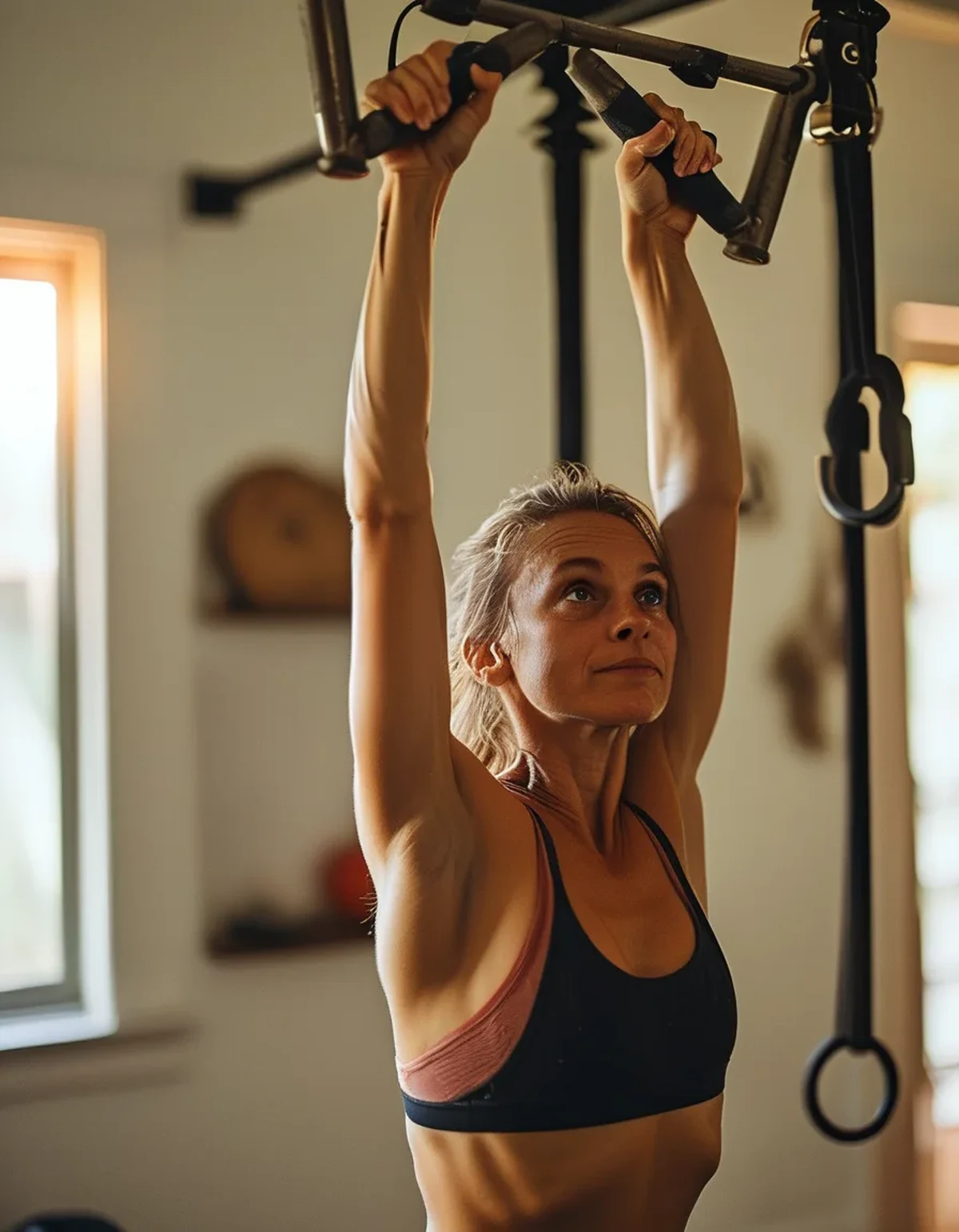
How to do it: Sit with your forearm resting on a table, palm down, hand hanging off the edge. Hold a light weight - 1 to 2kg, or a full water bottle - and lift the back of the hand upward, then hold at the top. Time how long you can maintain the position before it drops.
Rough benchmarks: 30 seconds with 1kg is a baseline; 60 seconds with 2kg is good. Compare left and right - a difference of more than about 20% is worth noting.
What it tells you: this is the most commonly weak area in anyone who trains grip hard, because every gripping exercise trains the flexors and almost nothing trains the extensors. The resulting imbalance is strongly associated with lateral elbow pain.
Why it belongs in a grip assessment: forearm pain that stops grip training is usually an extensor problem, not a flexor one. If your grip work keeps getting interrupted by elbow or forearm discomfort, this test will usually show why.
Training it: wrist extensions with a light weight, 2 to 3 sets of 15 to 20, and rubber band finger extensions. Low load, high repetition, and consistently - this is maintenance work rather than strength work, and it prevents more problems than it solves after the fact.
If you already have persistent elbow or forearm pain, get it assessed rather than training through it.
Test 5: The one-hand carry - asymmetry and core-linked grip
What it measures: support grip under load on one side, and how well the rest of the body holds position while one hand works - the closest test to real-world carrying.
How to do it: Pick up a heavy object in one hand - a dumbbell, kettlebell or loaded bag at roughly 25 to 30% of body weight - and walk for distance or time. Keep the shoulders level and the torso upright. Record both the distance and which hand fails first.
Rough benchmarks: 60 seconds or 40 metres at 25% of body weight per hand is a reasonable baseline. The more important number is the difference between sides.
What it tells you: asymmetry between hands of more than about 15% is worth addressing - and it is very common, since dominant hands do more of everything. The fix is training the weaker side first and matching the stronger side’s volume to it, not exceeding it.
The second thing it reveals: whether your grip fails or your torso does. If you have to lean to keep walking, the limiting factor is lateral core strength rather than grip, which changes what you should train entirely.
Training it: suitcase carries, always leading with the weaker hand, 3 to 4 sets of 30 to 45 seconds per side. This is one of the highest-return exercises available because it trains grip, core and posture simultaneously.
Reading all five together: write down the five results and look at the pattern. Weak pinch with strong hangs means train the thumb. A big bar-to-towel gap means train thick grip. Weak extensors means add antagonist work before anything else. Large left-right asymmetry means fix the imbalance before adding load. Retest in eight weeks - grip responds quickly and the numbers move visibly.
FAQ: Grip Testing Questions, Answered
How often should I retest?
Every six to eight weeks is sensible. Grip adapts relatively quickly, so that window is long enough to show real change and short enough to keep the plan responsive. Test on a rested day, not after a heavy session.
Why is my dead hang so much longer than my towel hang?
A bar lets the fingers hook passively, doing much of the work skeletally. A towel deforms and requires continuous active crushing. A large gap means you are relying on hooking rather than crushing strength, which fails on thick, round or soft objects.
Do I need a dynamometer for accurate results?
No. A dynamometer measures one thing - maximal crushing force - and these five tests cover far more of what grip actually involves. Consistency in how you test matters more than the equipment.
Is a big difference between hands a problem?
More than about 15% is worth addressing. Some asymmetry is normal since dominant hands do more of everything, but a large gap tends to grow if ignored. Train the weaker side first and match the stronger side to its volume.
Why do my forearms hurt when I train grip?
Often an imbalance between the flexors, which everything trains, and the extensors, which almost nothing trains. Test 4 usually reveals it. Add light wrist extension work, and get persistent pain assessed rather than training through it.
How long until grip strength improves?
Neurological gains appear within two to three weeks and are noticeable. Structural change takes eight to twelve weeks of consistent work. Grip responds faster than most other capacities, which makes it satisfying to train.
TL;DR:
- Grip is several distinct capacities, and strength in one says nothing about the others
- Dead hang tests support endurance - 30 to 45 seconds is a reasonable baseline
- Plate pinch tests thumb strength, the most neglected and the one that fails with age
- Towel hang tests crushing; a big gap from your bar hang means you are hooking, not crushing
- Wrist extension holds test the antagonist muscles, the usual cause of forearm and elbow pain
- One-hand carries reveal left-right asymmetry and whether grip or core is the real limiter
- Read the pattern across all five, not any single number, and retest in eight weeks
Fifteen minutes tells you what six months of guessing would not.
Keep Reading
This article is for general informational purposes only and is not medical advice. Always consult a qualified health professional for guidance specific to you.